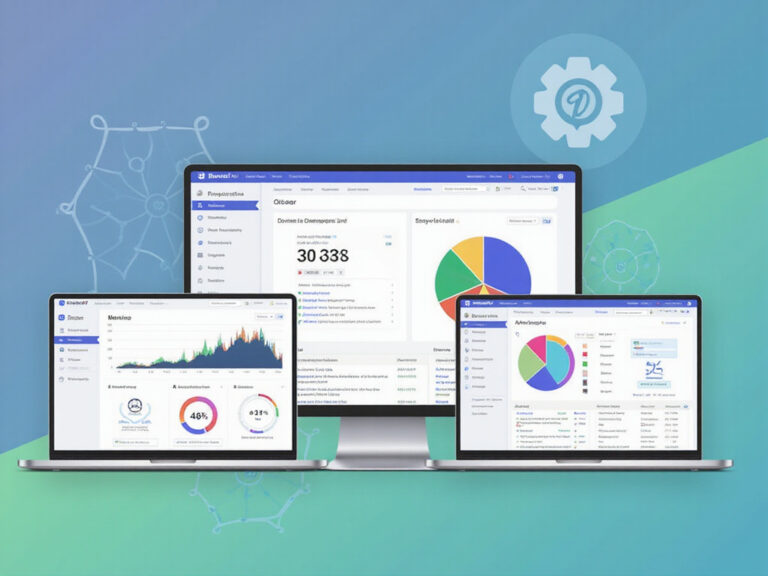
What is SD-WAN: A Comprehensive Technical Deep Dive
Software-Defined Wide Area Networking (SD-WAN) represents a paradigm shift in enterprise connectivity architectures, fundamentally transforming how organizations build, manage, and secure their wide area networks. As traditional MPLS-based networks struggle to accommodate the rapid migration to cloud services, increasing bandwidth demands, and distributed workforce requirements, SD-WAN has emerged as a critical technology for modern network infrastructure. This comprehensive analysis explores the technical underpinnings, architectural components, implementation considerations, security implications, and future trajectory of SD-WAN technology.
The Evolution of Enterprise WAN Architecture
Traditional WAN architectures have followed a hub-and-spoke model for decades, with branch locations backhauling traffic to centralized data centers through dedicated, expensive MPLS circuits. This design emerged in an era when applications were primarily hosted in corporate data centers, and internet traffic represented a minimal portion of business communication. The fundamental issues with traditional WAN approaches include:
- Inflexible Traffic Routing: MPLS circuits provide reliable connectivity but lack the intelligence to adapt to changing application requirements and network conditions
- High Bandwidth Costs: Dedicated circuits command premium pricing, often 3-5x more expensive per Mbps than broadband alternatives
- Deployment Complexity: Adding new sites requires extensive coordination with carriers, often resulting in 60-90 day provisioning timelines
- Limited Cloud Optimization: Traditional WANs weren’t designed for direct cloud connectivity, forcing inefficient traffic patterns
- Hardware Dependency: Traditional routers require extensive CLI configurations and specialized expertise
As enterprise application portfolios increasingly shift to SaaS and cloud platforms, these limitations have become untenable. A 2022 Gartner report indicates that over 75% of enterprise-generated data will be processed outside traditional data centers by 2025, rendering hub-and-spoke architectures increasingly inefficient. This fundamental disconnect between application delivery and network architecture has driven the development and adoption of SD-WAN solutions.
SD-WAN: Core Technical Foundations
At its essence, SD-WAN is an application of software-defined networking (SDN) principles to wide-area connectivity. It introduces a virtual WAN overlay that abstracts underlying transport mechanisms, enabling intelligent, policy-driven traffic management across multiple connection types. The core technical components that distinguish SD-WAN from traditional routing approaches include:
Centralized Control Plane with Distributed Forwarding
Traditional routers operate with coupled control and data planes, with each device independently building routing tables and making forwarding decisions. SD-WAN fundamentally separates these functions:
- Control Plane Centralization: Network-wide policies, configurations, and security rules are defined centrally in an orchestration platform or controller
- Distributed Data Plane: Individual SD-WAN edge devices handle packet forwarding based on these centralized policies
This architecture enables network-wide visibility and consistent policy enforcement while maintaining the performance benefits of distributed forwarding. The controller continuously collects telemetry from edge devices, providing a comprehensive view of network health and performance metrics that inform dynamic path selection decisions.
Transport-Independent Overlay
SD-WAN creates a logical overlay network that abstracts the specifics of physical transport. This overlay approach enables:
- Transport Agnosticism: Simultaneous utilization of MPLS, broadband, LTE, 5G, and satellite connections
- Zero-Touch Provisioning: Edge devices can be shipped to remote locations and automatically configured upon connection
- Dynamic Path Selection: Real-time traffic steering based on application requirements, link quality, and business policies
The overlay is typically constructed using IPsec tunnels that create a secure fabric connecting all network endpoints. Each packet traversing the SD-WAN is encapsulated, and depending on the vendor implementation, may be assigned metadata that facilitates intelligent routing decisions.
Application-Aware Routing
A fundamental technical differentiator in SD-WAN is its ability to identify and classify applications, then make routing decisions based on their specific requirements. This capability is implemented through:
- Deep Packet Inspection (DPI): Examining packet contents beyond header information to identify application signatures
- Application Database: Constantly updated library of application fingerprints enabling accurate classification
- Policy-Based Routing: Granular rules that map applications to appropriate transport paths based on business priorities
For example, latency-sensitive VoIP traffic might be directed over an MPLS circuit, while general web browsing uses broadband, and backup traffic takes the lowest-cost path regardless of performance characteristics. This granularity enables organizations to optimize both performance and cost simultaneously.
Technical Implementation of Dynamic Path Selection
The intelligence behind SD-WAN’s routing decisions lies in continuous link monitoring and quality assessment algorithms. Most enterprise-grade SD-WAN solutions implement:
- Active Link Probing: Sending synthetic test packets to measure latency, jitter, packet loss, and bandwidth availability
- Passive Flow Analysis: Monitoring actual application traffic to assess performance in real-time
- Forward Error Correction (FEC): Adding redundant data to packets allowing reconstruction of lost information without retransmission
- Packet Duplication: Sending critical packets over multiple paths simultaneously to ensure delivery
These mechanisms collect performance metrics that feed into path selection algorithms. Many implementations use a weighted scoring system that considers multiple factors:
path_score = (w₁ × latency) + (w₂ × jitter) + (w₃ × packet_loss) + (w₄ × available_bandwidth)
Where w₁, w₂, w₃, and w₄ are configurable weights that adjust the importance of each metric based on application requirements. When path_score falls below defined thresholds, traffic is automatically redirected to alternate paths.
SD-WAN Reference Architecture
While implementations vary by vendor, a typical SD-WAN architecture consists of several key components working in concert to deliver intelligent network connectivity:
Orchestration and Management Layer
The brain of the SD-WAN implementation resides in the orchestration layer, which provides:
- Centralized Policy Definition: GUI-based interface for defining business intent and application requirements
- Zero-Touch Provisioning: Automated device onboarding and configuration management
- Analytics and Visibility: Comprehensive dashboards showing network health, application performance, and security events
- API Integrations: Programmable interfaces for integration with broader IT ecosystems
This layer may be deployed as a cloud-hosted service, on-premises software, or as a virtualized component in a data center. Many SD-WAN providers offer multi-tenant SaaS platforms that manage thousands of customer deployments simultaneously.
SD-WAN Edge Devices
At each location, SD-WAN edge devices (physical or virtual) serve as the on-ramp to the SD-WAN overlay network. These devices typically provide:
- Multi-WAN Connectivity: Physical interfaces for connection to diverse transport types
- Local Policy Enforcement: Implementing traffic steering, QoS, and security rules
- Application Recognition: Local DPI engines for traffic classification
- Tunnel Establishment: Creating and managing encrypted connections to other network endpoints
- Performance Monitoring: Continuous measurement of transport quality metrics
Edge devices range from small branch appliances supporting 50-100Mbps to high-performance systems capable of 10Gbps+ aggregate throughput. Many vendors also offer virtualized instances for deployment in cloud environments or as software on commodity hardware.
SD-WAN Controllers
The controller functions as the coordination point between the management plane and data plane, handling:
- Configuration Distribution: Pushing policies and settings to edge devices
- Topology Management: Maintaining the logical network map and connection states
- Telemetry Collection: Aggregating performance data from network endpoints
- Exception Handling: Managing device failures and connectivity issues
Controllers may be deployed as redundant pairs to ensure high availability, and in large deployments may be hierarchical, with regional controllers reporting to global instances for scalability.
Security Services
Modern SD-WAN implementations incorporate extensive security capabilities, either natively or through integration:
- Zone-Based Firewalls: Controlling traffic flows between network segments
- Intrusion Prevention: Detecting and blocking known attack patterns
- URL Filtering: Controlling access to web destinations based on categorization
- TLS Inspection: Decrypting and examining encrypted traffic for threats
- Cloud Security Integration: Connections to SASE and cloud-delivered security services
The level of integrated security varies significantly between vendors, with some offering basic stateful firewalls while others provide comprehensive UTM (Unified Threat Management) capability.
Deployment Models
SD-WAN can be deployed in multiple architectural patterns, each addressing different organizational requirements:
On-Premises Deployment
In this model, all SD-WAN components reside within the organization’s infrastructure:
- Advantages: Complete control over infrastructure, data sovereignty compliance, offline operation capability
- Disadvantages: Higher capital expenditure, IT management overhead, scalability constraints
This approach is typically favored by organizations with strict regulatory requirements or those with existing data center investments they wish to leverage.
Cloud-Managed Deployment
The most common model today utilizes cloud-based orchestration with on-premises edge devices:
- Advantages: Reduced management overhead, automatic updates, subscription-based pricing
- Disadvantages: Ongoing operational expenses, potential internet connectivity dependencies
This hybrid approach balances local performance and security with centralized management efficiency.
Fully Cloud-Native Deployment
Emerging architectures replace physical edge devices with cloud-hosted virtual instances:
- Advantages: Minimal on-site hardware, rapid scalability, simplified branch infrastructure
- Disadvantages: Higher bandwidth requirements, potential latency implications, dependency on cloud availability
This model aligns well with organizations pursuing cloud-first IT strategies and those with minimal on-premises infrastructure.
SD-WAN vs. Traditional WAN: Technical Comparison
To understand the technical advantages of SD-WAN, a detailed comparison with traditional WAN approaches reveals significant architectural differences:
| Capability | Traditional WAN | SD-WAN |
|---|---|---|
| Configuration Model | Device-by-device CLI with manual synchronization | Centralized policy-based configuration with automated distribution |
| Transport Utilization | Single active path with backup links (active/passive) | Simultaneous use of multiple transports (active/active) |
| Traffic Engineering | Static routes, PBR based on IP/port | Dynamic application-aware routing with real-time link quality assessment |
| Deployment Process | Skilled technician requiring on-site configuration | Zero-touch provisioning with automated onboarding |
| Cloud Connectivity | Backhaul to data center, then to cloud | Direct localized cloud access with security policy enforcement |
| Security Model | Perimeter-based with separate security appliances | Distributed security with integrated controls at every edge |
| Visibility and Analytics | Limited, often requiring separate monitoring tools | Comprehensive application and network performance metrics |
| Failure Response | Routing protocol convergence (seconds to minutes) | Sub-second detection and remediation |
The technical advantages of SD-WAN become particularly evident in metrics that directly impact application performance and user experience. In typical deployments, organizations can expect:
- 50-80% reduction in WAN circuit costs by supplementing or replacing MPLS with broadband
- 30-50% improvement in cloud application performance through direct local internet breakout
- 90% faster deployment of new sites through zero-touch provisioning
- 60-80% reduction in configuration time through centralized policy management
These benefits derive directly from the architectural advantages of SD-WAN’s software-defined approach to network management.
Technical Deep Dive: SD-WAN Security Architecture
Security represents a critical dimension of SD-WAN implementations, with significant architectural implications. As network perimeters dissolve in distributed environments, SD-WAN must incorporate comprehensive security controls that address multiple threat vectors:
Network Segmentation and Micro-Segmentation
SD-WAN enables granular network segmentation through VPN and VLAN technologies, creating isolated communication domains:
- VRF-Like Separation: Maintaining complete isolation between traffic classes
- Zone-Based Policies: Controlling traffic flows between segments
- Multi-Tenant Architecture: Supporting segmentation for different business units or customers
Advanced implementations support micro-segmentation, where individual workloads or even user-application pairs can be isolated according to zero-trust principles.
Secure Transport Encryption
All SD-WAN solutions encrypt traffic traversing public networks, typically implementing:
- IPsec with AES-256: Industry-standard encryption for site-to-site communications
- Perfect Forward Secrecy: Ensuring session keys cannot be compromised retrospectively
- PKI Infrastructure: Managing certificate distribution and validation
The specific implementation of cryptographic operations varies by vendor, with some leveraging hardware acceleration for encryption while others rely on software-based cryptography, impacting overall performance and scalability.
Integrated Security Services
Modern SD-WAN platforms incorporate increasingly sophisticated security capabilities:
- Next-Generation Firewall: Application-aware filtering beyond simple port/protocol rules
- Intrusion Prevention: Signature and behavior-based threat detection
- Anti-Malware: Scanning for known malicious content
- DNS Security: Filtering and monitoring DNS requests to block malicious domains
- Data Loss Prevention: Identifying and blocking sensitive data exfiltration
The trend toward Secure Access Service Edge (SASE) has accelerated the convergence of networking and security functions in unified platforms, blurring the lines between traditional product categories.
Security Integration and Orchestration
Beyond integrated controls, SD-WAN platforms must interact with broader security ecosystems:
- SIEM Integration: Forwarding security events to centralized analytics platforms
- Identity Integration: Incorporating user context into access decisions
- Cloud Security Gateways: Directing traffic to cloud-based security services
- Threat Intelligence: Consuming and applying real-time threat data
This integration capability is typically implemented through APIs and standard protocols like syslog, IPFIX, and webhook notifications.
Security Policy Implementation Example
To illustrate how SD-WAN security policies are implemented, consider this simplified JSON representation of a security rule definition:
{
  "policy_name": "Guest_Internet_Access",
  "source_zones": ["Guest_VLAN"],
  "destination_zones": ["Internet"],
  "applications": ["HTTP", "HTTPS", "DNS"],
  "schedule": "Always",
  "action": "Allow",
  "security_services": {
    "url_filtering": {
      "enabled": true,
      "block_categories": ["Malware", "Phishing", "Adult", "Gambling"]
    },
    "intrusion_prevention": {
      "enabled": true,
      "profile": "Conservative"
    },
    "antivirus": {
      "enabled": true,
      "scan_archives": false
    },
    "ssl_inspection": {
      "enabled": true,
      "exempt_categories": ["Financial", "Healthcare"]
    }
  },
  "logging": {
    "session_start": true,
    "session_end": true,
    "application_info": true
  }
}
This definition would be processed by the SD-WAN orchestrator, translated into device-specific configurations, and distributed to all edge devices for consistent policy enforcement across the network.
SD-WAN Integration with Cloud Services
A defining capability of SD-WAN is its ability to optimize connectivity to cloud services, a critical requirement as enterprises increasingly adopt SaaS and IaaS platforms. The technical approaches to cloud integration include:
Direct Internet Access (DIA)
The simplest approach establishes local internet breakout at each branch location:
- Advantages: Low latency access, reduced backhaul costs
- Disadvantages: Distributed security enforcement points, potential inconsistent performance
This model works well for accessing globally distributed SaaS applications like Microsoft 365 or Salesforce, where the provider’s points of presence are widely available.
Cloud On-Ramp Services
Many SD-WAN vendors offer optimized connectivity to major cloud providers through dedicated connections:
- Pre-established Connections: Direct peering with AWS, Azure, GCP via cloud exchange points
- Optimized Routing: Intelligent path selection to reach the closest cloud entry point
- Performance Monitoring: Continuous measurement of cloud application experience
These services effectively extend the SD-WAN fabric directly into cloud environments, maintaining traffic within the provider’s optimized backbone for as much of the path as possible.
Virtual SD-WAN Instances in the Cloud
For deeper integration, virtualized SD-WAN endpoints can be deployed directly within cloud environments:
- AWS Transit Gateway Integration: Connecting SD-WAN directly to AWS routing infrastructure
- Azure vWAN Integration: Leveraging Microsoft’s global network for optimized connectivity
- Multi-Cloud Connectivity: Creating a unified fabric spanning multiple cloud providers
This approach is particularly valuable for organizations with significant infrastructure deployed across multiple clouds, enabling consistent policy enforcement and simplified management of complex environments.
Technical Implementation Example: AWS Transit Gateway Integration
As a concrete example of cloud integration, many SD-WAN solutions support integration with AWS Transit Gateway using BGP routing:
# SD-WAN Edge configuration for AWS Transit Gateway integration
configure terminal
   interface tunnel100
     description AWS-TGW-Connect
     ip address 169.254.10.2/30
     tunnel source interface GigabitEthernet0/0
     tunnel destination 54.239.x.x
     tunnel protection ipsec profile AWS-IPSEC

   router bgp 65000
     neighbor 169.254.10.1 remote-as 64512
     address-family ipv4
       neighbor 169.254.10.1 activate
       network 10.0.0.0 mask 255.255.0.0
     exit-address-family

   sd-wan policy
     preferred-path application Office365 path INTERNET
     preferred-path application AWS-WorkSpaces path TUNNEL100
     preferred-path application Default path MPLS
exit
This configuration establishes a secure tunnel to AWS Transit Gateway, exchanges routing information via BGP, and applies specific application policies to direct cloud traffic appropriately. The result is seamless integration between the organization’s SD-WAN fabric and their AWS cloud environment.
Advanced SD-WAN Optimization Techniques
Beyond basic path selection, enterprise-grade SD-WAN implementations employ sophisticated optimization techniques to maximize performance under challenging network conditions:
Traffic Shaping and QoS
SD-WAN platforms implement multi-level QoS to prioritize critical applications:
- Hierarchical QoS: Allocating bandwidth across applications, departments, and traffic classes
- Dynamic Bandwidth Adjustment: Adapting to changing link conditions
- Per-Packet Traffic Engineering: Making forwarding decisions at individual packet granularity
Advanced implementations support sub-application QoS, where different functions within the same application receive different treatment (e.g., prioritizing Zoom audio over video when bandwidth is constrained).
WAN Optimization Integration
Many SD-WAN platforms incorporate traditional WAN optimization techniques:
- TCP Optimization: Modifying window sizes, selective acknowledgments, and congestion parameters
- Data Deduplication: Identifying and eliminating redundant data transfers
- Application Acceleration: Protocol-specific optimizations for common applications
- Compression: Reducing data volume through real-time compression algorithms
These capabilities become particularly important when dealing with high-latency or capacity-constrained links such as satellite connections or international MPLS circuits.
Forward Error Correction
To combat packet loss, many SD-WAN implementations employ forward error correction (FEC) techniques:
- Parity-Based FEC: Adding parity packets to allow reconstruction of lost data
- Adaptive FEC Ratios: Adjusting redundancy levels based on observed link quality
- Selective Application: Applying FEC only to loss-sensitive applications
By combining FEC with other optimization techniques, SD-WAN can maintain application performance even on connections experiencing 5-10% packet loss, where TCP-based applications would typically fail.
Packet Replication and Elimination
For ultra-critical traffic, SD-WAN can simultaneously send identical packets across multiple paths:
- Multipath Duplication: Sending identical packets over different transport links
- Sequence Number Tracking: Identifying and eliminating duplicate packets at the receiver
- Jitter Buffer Management: Reordering packets and normalizing timing
This approach provides exceptional reliability at the cost of increased bandwidth consumption, making it appropriate for mission-critical real-time applications like telemedicine, financial trading, or industrial control systems.
SD-WAN Implementation Challenges and Considerations
Despite the compelling benefits, implementing SD-WAN involves navigating several technical and organizational challenges:
Integration with Existing Infrastructure
Few organizations implement SD-WAN as a greenfield deployment, requiring careful integration with legacy systems:
- Routing Protocol Interoperability: Integrating with existing OSPF, EIGRP, or BGP infrastructures
- Multicast Support: Accommodating applications dependent on multicast delivery
- QoS Mapping: Translating between SD-WAN policies and traditional QoS markings
- Migration Planning: Designing phased transitions to minimize disruption
Successful implementations typically involve a detailed discovery phase to document current traffic patterns and application requirements before designing the SD-WAN overlay.
Global Deployment Considerations
Organizations with international footprints face additional complexities:
- Regulatory Compliance: Addressing data sovereignty and encryption restrictions
- Carrier Diversity: Managing relationships with multiple regional ISPs
- Regional Performance Variations: Adapting to significantly different internet quality metrics
- Physical Deployment Logistics: Coordinating hardware installation across diverse locations
These challenges often necessitate a regionalized approach to SD-WAN design, with varying transport strategies and security models adapted to local conditions.
Performance Monitoring and Troubleshooting
The complexity of SD-WAN environments creates new challenges for operations teams:
- Correlation Analysis: Identifying root causes across multiple layers (transport, overlay, application)
- Historical Performance Tracking: Maintaining sufficient telemetry data for trend analysis
- Synthetic Testing: Implementing active monitoring to detect issues before users are impacted
- Cross-Domain Visibility: Integrating SD-WAN metrics with broader IT monitoring systems
Advanced SD-WAN platforms provide extensive analytics capabilities, but integrating these with existing operations frameworks remains challenging for many organizations.
Technology Selection and Evaluation
The diverse SD-WAN marketplace presents significant evaluation challenges:
- Feature/Function Analysis: Comparing widely varying capability sets across vendors
- Performance Verification: Testing solutions under realistic conditions
- TCO Calculation: Accounting for hardware, software, support, and operational costs
- Future-Proofing: Assessing vendor roadmaps and technology evolution
Many organizations develop detailed proof-of-concept methodologies to evaluate SD-WAN solutions against their specific requirements before committing to large-scale deployments.
The Future of SD-WAN: Emerging Trends and Technologies
SD-WAN continues to evolve rapidly, with several key technological trends shaping its future development:
Convergence with SASE Frameworks
The integration of SD-WAN with cloud-delivered security services is accelerating, leading to Secure Access Service Edge (SASE) architectures:
- Identity-Centric Networking: Moving from IP-based to identity-based policies
- Zero Trust Network Access: Continuous verification regardless of location
- Cloud-Native Security: Shifting security functions from appliances to cloud platforms
- Global PoP Architecture: Distributed enforcement points to minimize latency
This convergence represents a fundamental architectural shift, with SD-WAN becoming one component within a broader secure networking ecosystem rather than a standalone technology.
AI/ML-Driven Network Intelligence
Machine learning is increasingly applied to network management challenges:
- Predictive Analysis: Anticipating congestion or failures before they impact users
- Autonomous Remediation: Self-healing networks that adjust to changing conditions
- Anomaly Detection: Identifying unusual traffic patterns indicative of security threats
- Intent-Based Networking: Translating business objectives into network policies
These capabilities move beyond rule-based management to truly intelligent networks that continuously adapt to optimize performance and security.
5G Integration
The deployment of 5G networks creates new opportunities for SD-WAN:
- High-Bandwidth Wireless: Fixed wireless access offering fiber-like speeds
- Network Slicing: Guaranteed QoS on mobile networks for enterprise applications
- Edge Computing Integration: Leveraging mobile edge computing resources
- IoT Connectivity: Supporting massive machine-type communications
As 5G deployments mature, SD-WAN platforms will evolve to leverage these capabilities, potentially reducing or eliminating wired connectivity requirements for many use cases.
Multi-Cloud Networking
As organizations adopt multiple cloud platforms, SD-WAN is evolving to provide seamless connectivity across heterogeneous environments:
- Cloud-to-Cloud Networking: Direct connectivity between different cloud providers
- Unified Policy Framework: Consistent security and performance policies across all environments
- Automated Provisioning: Infrastructure-as-code approaches to network deployment
- Application-Specific Networking: Tailored connectivity for individual workloads
This evolution transforms SD-WAN from primarily a branch connectivity technology to a comprehensive network fabric spanning on-premises, cloud, and edge environments.
Conclusion: SD-WAN as a Strategic Technology Platform
SD-WAN has evolved from a tactical cost-reduction technology to a strategic platform enabling digital transformation initiatives. By abstracting network complexity, providing application-aware routing, and integrating comprehensive security capabilities, SD-WAN addresses the fundamental connectivity challenges of modern distributed organizations.
As cloud adoption accelerates and workforce models become increasingly distributed, the importance of intelligent, adaptable network infrastructure will only grow. Organizations that successfully implement SD-WAN gain not only immediate operational benefits but also establish a foundation for future technology evolution, enabling them to respond more quickly to changing business requirements and emerging opportunities.
The convergence of networking, security, and cloud technologies continues to blur traditional boundaries between these domains, with SD-WAN serving as a critical integration point. By understanding the technical foundations, architectural implications, and future directions of SD-WAN, organizations can make informed decisions that align their network infrastructure with broader business and technology strategies.
The journey toward software-defined infrastructure represents a fundamental shift in how networks are designed, deployed, and managed. SD-WAN stands as both a practical implementation of these principles and a harbinger of further evolution toward truly intelligent networks that respond autonomously to business needs.
Frequently Asked Questions About What is SD-WAN
What is the fundamental difference between SD-WAN and traditional WAN?
SD-WAN fundamentally differs from traditional WAN by separating the control plane from the data plane, creating a software-defined overlay that abstracts the underlying transport mechanisms. While traditional WAN relies on hardware-centric configurations with traffic routing based primarily on IP addresses and static rules, SD-WAN implements application-aware routing with dynamic path selection based on real-time network conditions. This allows SD-WAN to simultaneously use multiple connection types (MPLS, broadband, LTE) in an active/active configuration rather than the active/passive approach of traditional WANs. Additionally, SD-WAN features centralized policy management, automated deployment capabilities, and integrated security functions that traditional router-based WANs typically lack.
How does SD-WAN improve cloud application performance?
SD-WAN improves cloud application performance through several technical mechanisms: 1) Direct Internet Access (DIA) that allows branch locations to connect directly to cloud services without backhauling traffic through a central data center, reducing latency; 2) Application-aware routing that identifies cloud application traffic and directs it over the optimal path based on current performance metrics; 3) Dynamic path selection that continuously monitors connection quality and automatically switches paths if degradation occurs; 4) Cloud on-ramp services that provide optimized connectivity to major cloud providers through dedicated connections and peering arrangements; and 5) QoS enforcement that ensures critical cloud applications receive bandwidth priority over less important traffic. These capabilities typically result in 30-50% improvement in cloud application response times compared to traditional hub-and-spoke architectures.
What security capabilities are integrated into modern SD-WAN solutions?
Modern SD-WAN solutions integrate comprehensive security capabilities that include: 1) Next-Generation Firewall functionality with application-aware filtering and deep packet inspection; 2) Intrusion Prevention Systems that detect and block attack patterns; 3) Secure Web Gateway features for URL filtering and malicious content blocking; 4) TLS/SSL inspection for examining encrypted traffic; 5) Network segmentation and micro-segmentation to isolate traffic flows; 6) Encrypted tunneling using IPsec with AES-256 encryption for all site-to-site communications; 7) DNS security to prevent domain-based attacks; 8) Data Loss Prevention to identify sensitive information in transit; and 9) Integration with cloud security services as part of SASE (Secure Access Service Edge) architectures. The level of security integration varies by vendor, with some providing basic features while others offer comprehensive security platforms equivalent to dedicated security appliances.
How does SD-WAN help reduce WAN costs?
SD-WAN helps reduce WAN costs through several mechanisms: 1) Transport Independence that allows organizations to supplement or replace expensive MPLS circuits (typically $200-600 per Mbps) with broadband internet connections ($5-20 per Mbps); 2) Active/Active utilization that enables simultaneous use of all available connections rather than keeping backup links idle; 3) Bandwidth aggregation that combines multiple lower-cost circuits to achieve higher throughput; 4) Application-specific routing that sends only latency-sensitive traffic over premium connections while using economical paths for bulk transfers; 5) Centralized management that reduces operational expenses by simplifying deployment and troubleshooting; and 6) Zero-touch provisioning that eliminates the need for specialized technical personnel at branch locations during installation. Organizations typically report 50-80% reduction in circuit costs after SD-WAN implementation while simultaneously increasing available bandwidth.
What is the relationship between SD-WAN and SASE?
SD-WAN and SASE (Secure Access Service Edge) have a complementary relationship, with SD-WAN functioning as a critical component within the broader SASE framework. SASE represents an architectural approach that converges networking and security functions into a cloud-delivered service model. In this architecture, SD-WAN provides the intelligent connectivity layer that optimizes traffic routing and application performance, while cloud-delivered security services handle functions like threat prevention, data protection, and access control. The key distinction is that while SD-WAN primarily focuses on optimizing connectivity between sites and to applications, SASE extends this to include identity-based security, zero-trust access controls, and global cloud-native security services that protect users regardless of location. Many traditional SD-WAN vendors are evolving their offerings toward SASE by either developing native security capabilities or partnering with specialized security providers.
What deployment models are available for SD-WAN implementation?
SD-WAN supports multiple deployment models to accommodate diverse organizational requirements: 1) On-premises deployment where all SD-WAN components, including orchestration, controllers, and edge devices, reside within the organization’s infrastructure, providing maximum control but requiring higher capital investment and management overhead; 2) Cloud-managed deployment, the most common approach, which utilizes cloud-based orchestration and management with on-premises edge devices, balancing control and convenience; 3) Fully managed SD-WAN services where a service provider handles all aspects of deployment and operations, reducing internal resource requirements but potentially limiting customization options; 4) Virtual SD-WAN deployments using software instances on commodity hardware or virtual machines rather than purpose-built appliances; and 5) Hybrid deployments that combine elements of these models based on location-specific requirements, such as using hardware appliances at major sites and virtual instances at smaller locations or in cloud environments.
How does SD-WAN handle application prioritization and QoS?
SD-WAN handles application prioritization and QoS through a sophisticated multi-level approach: 1) Application Recognition using deep packet inspection to identify applications at the protocol level, including encrypted traffic through pattern analysis; 2) Policy-Based Classification that assigns applications to priority tiers based on business importance; 3) Dynamic Path Selection that routes high-priority applications over the most reliable connections while sending lower-priority traffic over economical paths; 4) Hierarchical QoS that allocates bandwidth through a nested structure, first dividing capacity between traffic classes, then between applications within each class; 5) Traffic Shaping that enforces bandwidth limits and ensures fair resource allocation during congestion; 6) Adaptive QoS that automatically adjusts to changing network conditions and application demands; and 7) Sub-application prioritization that distinguishes between different functions within the same application (e.g., prioritizing voice over video in unified communications). These mechanisms work in concert to ensure critical applications maintain performance even during network constraints.
What are the key technical components of an SD-WAN architecture?
The key technical components of an SD-WAN architecture include: 1) Orchestration and Management Layer that provides centralized policy definition, configuration management, and analytics through a web-based interface or API; 2) SD-WAN Controllers that function as the control plane, distributing policies to edge devices, collecting telemetry, and maintaining the network topology; 3) SD-WAN Edge Devices (physical or virtual) that implement traffic steering, security policies, and tunnel establishment at each location; 4) Overlay Network comprised of encrypted tunnels that create a logical topology independent of the physical transport; 5) Dynamic Path Selection mechanisms that continuously monitor link quality and adjust routing in real-time; 6) Application Recognition engines that identify traffic types through deep packet inspection; 7) Policy Enforcement points that implement QoS, security rules, and traffic engineering; and 8) Analytics and Monitoring systems that provide visibility into application performance, network health, and security events. These components work together to deliver intelligent, adaptive connectivity across distributed environments.
How does SD-WAN integrate with multi-cloud environments?
SD-WAN integrates with multi-cloud environments through several technical approaches: 1) Virtual SD-WAN Instances deployed directly within cloud platforms (AWS, Azure, GCP) that extend the SD-WAN fabric into cloud environments; 2) Cloud On-Ramp Services that provide optimized connectivity to cloud providers through dedicated connections and strategic peering relationships; 3) Transit Gateway Integrations that connect SD-WAN directly to cloud routing infrastructures like AWS Transit Gateway or Azure Virtual WAN; 4) API-Based Automation that dynamically adjust connectivity as cloud resources scale up or down; 5) Cross-Cloud Connectivity that enables direct communication between different cloud providers without backhauling through on-premises locations; 6) Consistent Security Policies that enforce the same controls regardless of where applications are hosted; and 7) End-to-End Visibility that provides unified monitoring across hybrid and multi-cloud environments. These integrations create a seamless network fabric that spans traditional data centers, branch locations, and multiple cloud platforms while maintaining consistent performance, security, and operational models.
What are the emerging trends shaping the future of SD-WAN technology?
Key emerging trends shaping the future of SD-WAN technology include: 1) Convergence with SASE (Secure Access Service Edge) frameworks that integrate networking and security into cloud-delivered services; 2) AI/ML-Driven Intelligence that applies machine learning to network optimization, predictive analytics, and autonomous remediation; 3) 5G Integration leveraging high-bandwidth, low-latency cellular connectivity for primary or backup transport; 4) IoT-Specific Capabilities designed to handle massive device connectivity with unique security requirements; 5) Zero Trust Network Access principles that verify every access attempt regardless of source or location; 6) Edge Computing Integration that optimizes connectivity to distributed compute resources; 7) Intent-Based Networking that translates business objectives into automated network behaviors; 8) Multi-Cloud Networking focused on seamless connectivity across hybrid environments; and 9) Network Automation and Programmability through API-first designs and infrastructure-as-code approaches. These trends are driving SD-WAN evolution from a tactical connectivity solution to a strategic platform for digital business initiatives.
References: